
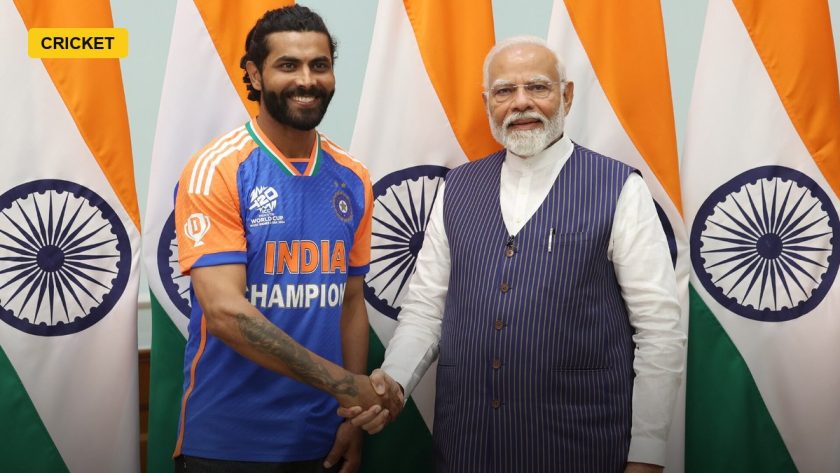
Ravindra Jadeja has returned to India’s Test squad for the tour of Sri Lanka, marking his first international recall since January 2026 after recovering from a tennis elbow injury sustained during IPL 2026. The 15-member squad, announced by the BCCI selection committee ahead of the two-Test series that began in Galle on August 15, 2026, brings back one of India’s most important all-round options just as the side navigates a heavily spin-dependent tour of the subcontinent.
An Injury That Kept Him Out for Months
Jadeja’s tennis elbow injury was sustained in May 2026, sidelining him for a stretch that included high-profile assignments and forced India’s team management to plan around his absence for months. His recovery, which reportedly included a period of rehabilitation before he was cleared for competitive cricket, was closely tracked by Indian cricket media given his standing as one of the side’s most reliable middle-order and bowling all-rounders over the past decade.
Why His Return Matters for This Series
India’s squad for Sri Lanka is unusually spin-heavy, featuring Kuldeep Yadav alongside uncapped spinners Manav Suthar and Saransh Jain, giving the team significant options for the turning, low-bounce conditions typical of Galle and Colombo. Jadeja’s return adds proven experience and left-arm variation to that mix, along with his customary lower-middle-order batting, a combination that has historically made him difficult to leave out of Indian Test XIs on home and subcontinent surfaces.
A Squad Reshaped by Absences Elsewhere
Jadeja’s comeback comes at a moment when India are managing several other fitness situations, including fast bowler Jasprit Bumrah, who was initially picked for the tour before being ruled out, with uncapped Auqib Nabi brought in as his replacement. All-rounder Washington Sundar will also miss the first Test, adding further weight to Jadeja’s importance in the squad’s balance for at least the series opener in Galle.
Different Views on His Long-Term Role
Some former players and commentators have welcomed Jadeja’s return as a much-needed boost to India’s bowling attack in unfamiliar Test conditions, while others have raised questions about workload management for a player in his late thirties returning from a significant injury, questioning whether he should be eased back gradually rather than thrown straight into a five-day match. India’s team management has publicly backed his selection, citing his fitness clearance and the tactical need for his skill set against Sri Lanka’s own spin-reliant approach.
A Tour With Layered Significance
Jadeja’s comeback unfolds within a series already carrying historic weight: it is India’s 600th Test appearance, an achievement that makes them just the third team, after England and Australia, to reach that number of matches. The series also features milestone pursuits for Rishabh Pant, closing in on 100 Test sixes, and Yashasvi Jaiswal, chasing a decades-old run record, giving the tour a distinctly commemorative feel even as results on the field remain the primary focus.
What’s Next
Jadeja’s workload and effectiveness in Galle will likely shape selection thinking for the second Test in Colombo, running from August 23 to 27, and beyond that, for India’s busy home season to follow. If his elbow holds up and his bowling returns to its previous sharpness, his presence could prove decisive in tight conditions where India’s spin options are expected to do the bulk of the wicket-taking work across both Tests.
A Veteran’s Perspective on the Comeback
Jadeja himself has spoken about the mental challenge of a lengthy layoff, telling reporters ahead of the tour that the rehabilitation process forced him to reassess his training routines and workload management heading into the later stages of his career. Team physiotherapists reportedly built a phased return-to-play program specifically around his bowling workload, gradually increasing overs in the nets before clearing him for full domestic and international cricket. Some in Indian cricket circles have praised the cautious approach as a sign of improved sports science within the BCCI’s support staff, contrasting it with earlier eras when players were often rushed back from injury. Others remain watchful, noting that all-rounders carrying both batting and bowling workloads face a higher risk of recurrence, meaning his workload through the Sri Lanka tour will be monitored as closely as his output. India’s team management has said Jadeja will likely be used in shorter bowling spells initially, with the coaching staff prioritizing his fielding sharpness and batting contribution before restoring him to a full workload as the two-Test series progresses toward its conclusion in Colombo.