
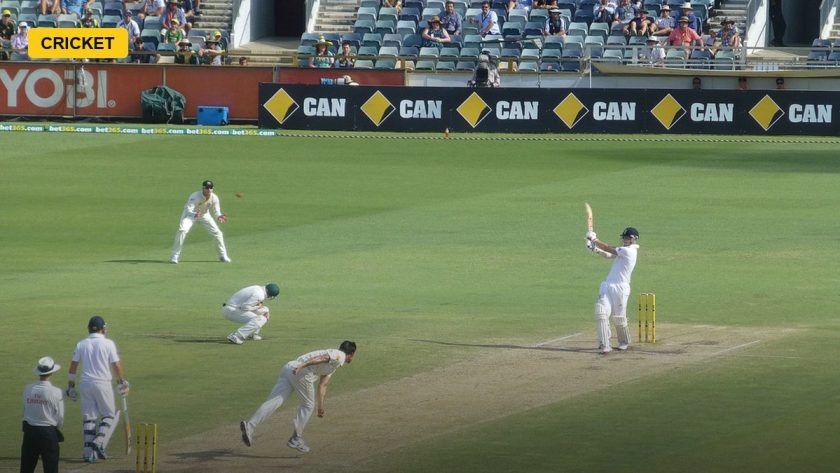
Ben Stokes brought the curtain down on his England career in the most Stokes-like fashion imaginable: announcing his retirement from international cricket mid-session on day four of the final Test against New Zealand at Trent Bridge in July 2026, then taking a wicket with the very next ball he bowled as news of the decision rippled around the ground. The move ended a 122-Test career that leaves Stokes as only the second player after Jacques Kallis to pass 7,000 Test runs and 250 Test wickets, with a final tally of 7,273 runs and 252 wickets.
A captaincy defined by extremes
Stokes made his Test debut in 2013 against Australia in Adelaide and went on to captain England in 44 Tests, winning 24 of them, a period that included the aggressive “Bazball” approach he championed alongside former coach Brendon McCullum. But the year leading up to his retirement had been turbulent: England were thrashed 4-1 in the Ashes in Australia over the 2025-26 winter, and Stokes was later dropped for one Test after a nightclub incident despite England’s win in the first Test of the New Zealand series that followed.
Why now
In comments carried by Sky Sports after the announcement, Stokes described the decision as one of the toughest of his career but ultimately “the best thing” for him, citing the cumulative physical toll of years bowling long spells while also captaining and batting at the top of the order. He had given no public indication beforehand that retirement was imminent, and the timing, mid-Test, mid-spell, caught teammates, opposition and broadcasters equally by surprise.
Two views on the legacy
Supporters within the England dressing room and former players praised Stokes for redefining what an all-rounder captain could do, pointing to his role in the 2019 World Cup final and Headingley Ashes heroics as evidence of a career that transcended statistics. Critics, however, argued that the Bazball era’s aggressive template, for all its entertainment value, ultimately could not deliver an Ashes win in Australia, and that Stokes’s captaincy record away from home told a more mixed story than the celebratory framing suggested at the time of his retirement.
Numbers that define the career
- 7,273 Test runs and 252 Test wickets across 122 Tests.
- Second player in history, after Jacques Kallis, to reach the 7,000-run, 250-wicket double.
- 44 Tests as captain, 24 wins.
What it means for England
The retirement triggered an immediate leadership vacuum. Head coach Brendon McCullum was subsequently removed from his post, and the ECB turned to Joe Root to resume the Test captaincy for the series against Pakistan that began in late August, with Root immediately equalling Sachin Tendulkar’s world record of 68 Test half-centuries at Headingley in his first match back in charge. The reshaping of England’s leadership group, on the field and in the coaching staff, has become the defining subplot of the team’s 2026 season.
What’s next
Stokes has given no indication of retiring from franchise or white-ball domestic cricket, leaving open the possibility of appearances in T20 leagues, though he will not play international cricket in any format again. For England, the challenge now is building a settled leadership structure around Root and a new coaching staff without the totemic figure who anchored the side through some of its most memorable and most difficult periods over the past decade. Tributes poured in from across the sport in the days following the announcement, with former opponents including several Australian players who had faced Stokes in Ashes contests praising his competitive spirit, while ECB chief executive Richard Gould described him as one of the most influential cricketers of his generation, both for results delivered and for the way he changed how English audiences engaged with the Test format.