
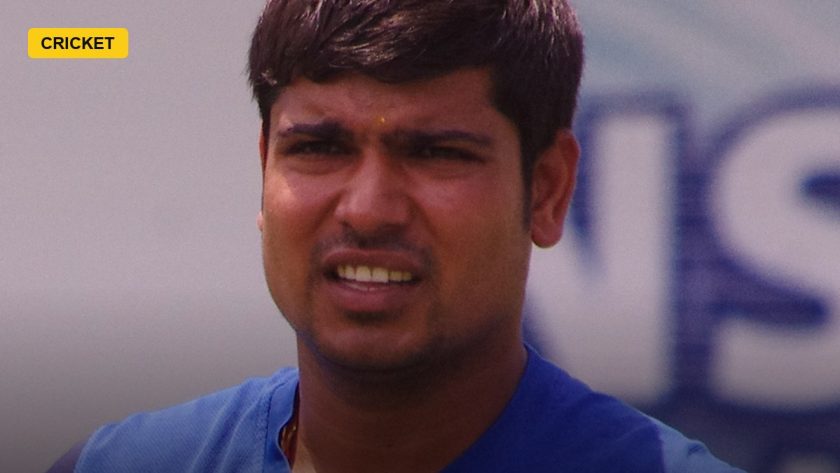
Karn Sharma, the 38-year-old legspinner who quietly built one of the most unusual records in Indian Premier League history, has called time on his cricket career. The Railways bowler made the announcement on a Saturday night following a UP T20 League match between Kanpur Superstars and Meerut Mavericks, confirming he will retire for good after his side’s final match of the Lucknow leg.
A Modest International Career, an Outsized IPL Legacy
On paper, Sharma’s international résumé is thin: one Test, two ODIs and a single T20I, all packed into a brief window in 2014. But that sparse international record undersells a domestic and franchise career that spanned nearly two decades. In 97 first-class matches for Railways, he claimed 270 wickets at an average of 27.60, with 14 five-wicket hauls, numbers that mark him out as one of the more prolific spin bowlers of his generation outside the international spotlight.
The Record No One Else Holds
Sharma’s defining achievement came in the IPL, where he won four titles in total but did something no other player has managed: lifting three consecutive IPL trophies with three different franchises. He won with Sunrisers Hyderabad in 2016, then moved to Mumbai Indians and won again in 2017, before switching to Chennai Super Kings and winning a third straight title in 2018. That 2018 triumph also made him the first player to win three IPL titles in a row, a feat since matched by only Suyash Sharma and Phil Salt. His fourth title arrived later in his career, cementing an extraordinary trophy cabinet built on being the reliable, if unheralded, bowler franchises trusted in title-winning seasons.
Why the Feat Is So Rare
IPL squads are notoriously fluid, with retentions, auctions and trades reshuffling rosters every season, so consistently landing on a champion team, let alone three different champion teams back-to-back, requires as much fortune as skill. Analysts point out that Sharma’s value lay less in matchwinning spells and more in his consistency: a wicket-to-wicket line, control of the middle overs, and a temperament suited to knockout cricket, qualities that made him a low-risk, high-trust selection for title-chasing franchises even when he wasn’t the headline signing.
A Career Bookended by Modesty
Former teammates and commentators have noted the irony that a player with such a unique record was rarely a star name during his playing days, and some in Indian cricket circles argue his volume of white-ball wickets and trophy contributions deserved more international opportunities than the four caps he received. Others counter that India’s spin-bowling pool during his prime, stacked with the likes of Ravichandran Ashwin and Ravindra Jadeja, simply left little room, regardless of Sharma’s franchise pedigree.
What Retirement Means Now
Sharma exits with his legacy intact as a trivia-defying footnote in IPL history, and with domestic cricket in India losing one of its most experienced campaigners. His retirement also closes the book on a generation of legspinners who came through around the same era as Amit Mishra and Piyush Chawla, bowlers whose franchise value often outstripped their international recognition. There is no word yet on whether Sharma will move into coaching or commentary, paths several of his contemporaries have taken, but given his reputation as a calm influence in high-pressure dressing rooms, a mentoring role in franchise cricket would not surprise anyone who played alongside him.
The Bigger Picture
As IPL franchises increasingly build squads around data-driven models and specialist roles, Sharma’s career serves as a reminder that adaptability and temperament can be just as valuable as raw statistics in T20 cricket’s biggest league. His three-team title run remains a record that, given the sport’s transfer patterns, may prove nearly impossible to replicate.