
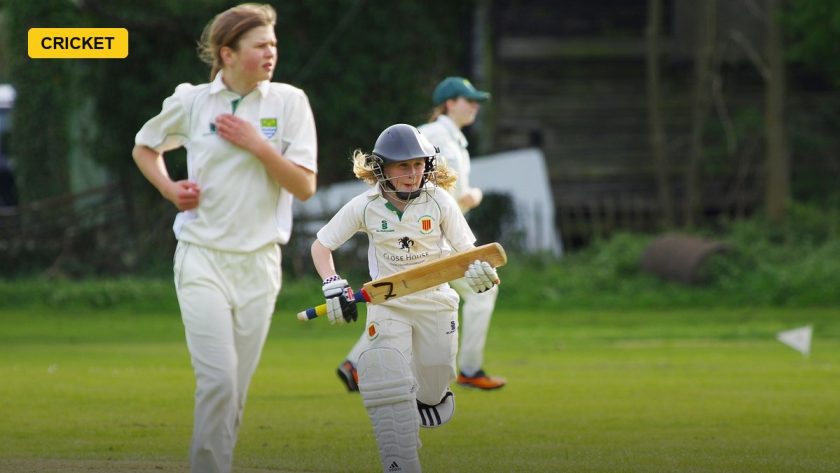
India named their squad for the men’s cricket competition at the 2026 Asian Games, and the headline inclusion was 15-year-old Vaibhav Sooryavanshi, who becomes the youngest player ever selected for an Indian cricket team at a major international event. Shreyas Iyer was confirmed as captain, with Tilak Varma as his deputy, in a 15-member squad that blends established internationals with rising talent ahead of the tournament in Aichi-Nagoya, Japan.
The Squad In Detail
Alongside Iyer and Varma, India’s squad includes Abhishek Sharma, Sanju Samson and Ishan Kishan among the wicketkeeping and top-order options, with Shivam Dube, Nitish Kumar Reddy, Axar Patel and Washington Sundar rounding out the all-rounder pool. The spin-bowling attack features Varun Chakaravarthy and Ravi Bishnoi, while the pace unit is anchored by Jasprit Bumrah alongside Harshit Rana and Arshdeep Singh. Rasikh Salam, Kartik Tyagi and Vicky Ostwal were named as reserves, giving the selectors a broad base to call upon in case of injury during the tournament.
Sooryavanshi’s Remarkable Rise
Vaibhav Sooryavanshi’s selection, at just 15 years old, represents an extraordinary acceleration through India’s age-group and domestic pathway, and his inclusion in a squad alongside established internationals like Bumrah and Samson underlines how highly his talent is rated by national selectors. His selection has drawn comparisons across Indian cricket media to some of the fastest rises through the system in the sport’s history, with pundits noting that being picked for a major multi-sport event at his age places him in genuinely rare company. The teenager’s inclusion also reflects a broader trend of Indian selectors showing increasing willingness to fast-track exceptional young talent into senior set-ups rather than requiring lengthy domestic apprenticeships.
Why The Asian Games Matter
The men’s cricket tournament at the Asian Games runs from September 24 to October 3 at Korogi Athletic Park in Aichi Prefecture, with India, Pakistan, Sri Lanka and Bangladesh all seeded directly into the quarterfinal stage based on their rankings, while other participating nations play a preliminary group stage to determine the remaining bracket spots. For India, competing so soon after the conclusion of their T20I series against Afghanistan means selectors have had to carefully manage workloads, resting some frontline players from bilateral duty specifically to ensure freshness for the Asian Games campaign.
Contrasting Perspectives
Supporters of Sooryavanshi’s fast-tracked inclusion argue that Indian cricket has historically been too conservative in blooding exceptional young talent, and that tournaments like the Asian Games, played in less pressured conditions than bilateral series against top-ranked opposition, offer an ideal low-risk environment to give him exposure at the highest level. More cautious voices within Indian cricket have urged patience, pointing out that the step up from age-group and domestic cricket to representing the country, even at a multi-sport event, brings scrutiny and pressure that can be difficult for any teenager to manage, regardless of talent. Team management have stressed that Iyer’s captaincy experience and the squad’s overall balance will help shield the youngster from any undue burden during the competition.
What’s Next
India begin their Asian Games campaign in the quarterfinal stage on September 28 against the runner-up from Group A, with matches scheduled at Korogi Sports Park in Nisshin. Whether Sooryavanshi features prominently in India’s XI or is eased in gradually will be one of the more closely watched selection stories of the tournament, as the squad looks to add another continental title to India’s growing list of achievements across formats.
The Path That Brought Sooryavanshi Here
Sooryavanshi’s rise has been tracked closely by talent scouts and domestic selectors over the past couple of years, with standout performances in age-group cricket and franchise trials repeatedly drawing comparisons to prodigious talents who broke into international cricket well ahead of the typical timeline. Coaches who have worked with him at the junior level have described a batting technique unusually mature for his age, combined with a temperament that has so far handled scrutiny and expectation without visible signs of strain, qualities selectors weighed heavily in fast-tracking his elevation to this squad.
His inclusion also places a spotlight on India’s broader talent identification systems, which have increasingly leaned on data-driven scouting alongside traditional domestic performances to surface players earlier than in previous generations. Former internationals turned commentators have noted that while raw talent alone rarely guarantees success at the senior level, the surrounding support structure India now provides, from sports psychologists to tailored fitness programmes, gives young players like Sooryavanshi a considerably smoother pathway than was available to earlier generations of prodigies.
Photo: shents / PIXABAY via Pixabay