
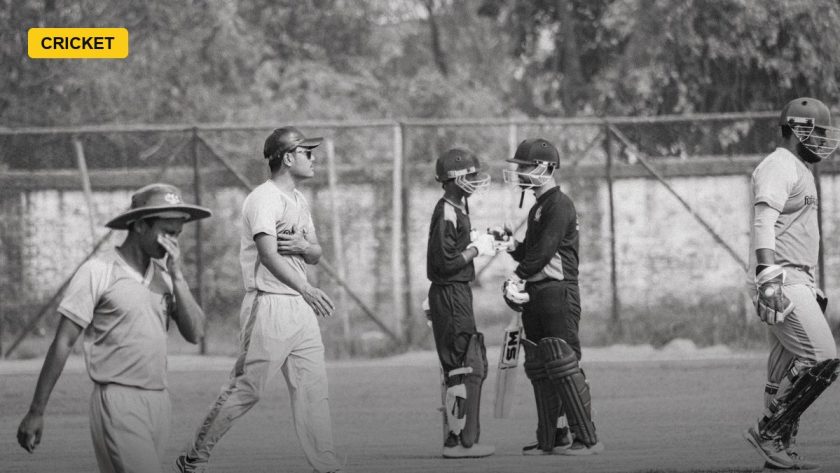
Nepal’s men’s cricket team have secured qualification for the 2026 Asian Games, with the cricket event set to run from September 24 to October 3 (with the wider Games continuing to October 13) in Aichi-Nagoya, Japan. The team’s path to Japan ran through the Asian Games Men’s Qualifier, held from May 31 to June 9, 2026 in Singapore, according to the Kathmandu Post.
A Path Through Group A
Nepal were drawn in Group A alongside China, Malaysia and Qatar during the qualifying event. Progressing out of that group, Nepal advanced to the semifinal stage alongside Hong Kong, Malaysia and Oman. Their qualification for the Asian Games itself was confirmed when Malaysia beat China by nine wickets in the group stage, a result that opened the door for Nepal’s advancement regardless of their own remaining fixtures in that round. Qualification tournaments of this nature are notoriously tight, with places often decided by results elsewhere in the group as much as by a team’s own performances, and Nepal’s progress through Group A and into the semifinal stage reflected a squad capable of grinding out the kind of consistent results that multi-team qualifying formats demand.
Lamichhane’s Spin Threat On Asian Pitches
Central to Nepal’s hopes in Japan is leg-spinner Sandeep Lamichhane, whose game is built around exploiting slow, dry and abrasive surfaces of the kind commonly found across Asian venues. That skill set makes him a dangerous weapon in conditions likely to be replicated at the Asian Games, where turning tracks could play a significant role in determining outcomes across the shorter tournament format. Lamichhane has built his reputation as one of the more consistent spin options to emerge from associate cricket in recent years, and a multi-sport event like the Asian Games, where matches are compressed into a tight window, places a premium on bowlers who can strike quickly and control the run rate through the middle overs. His experience against higher-ranked opposition on the franchise circuit also means Nepal will not be relying on an unproven quantity when the pressure comes on in Japan.
Airee’s Record-Breaking Firepower
At the other end of the innings, Nepal’s most explosive batting asset is captain Dipendra Singh Airee. His credentials speak for themselves: Airee holds the record for the fastest T20I half-century in history, reaching fifty in just nine balls. That kind of destructive hitting gives Nepal a genuine match-winning option with the bat, capable of turning games in a matter of overs against any opposition they encounter in Japan. Leading the side as captain while also carrying that kind of match-winning reputation with the bat places significant responsibility on Airee, but it also gives Nepal a genuine point of difference against opponents who may otherwise be more fancied on paper. A team built around a spinner capable of controlling an innings and a batter capable of blowing a chase open in a matter of balls has the ingredients to trouble sides with greater overall depth, provided the rest of the squad can support both match-winners consistently. As captain, Airee also carries the added responsibility of setting the tone from the top of the order, and his ability to combine leadership duties with match-defining strike rates will be closely watched throughout the tournament.
The Full Squad Nepal Will Take To Japan
Nepal’s 15-player squad for the Asian Games is led by Dipendra Singh Airee as captain and includes Rohit Kumar Paudel, Sompal Kami, Karan KC, Sandeep Lamichhane, Aarif Sheikh, Aasif Sheikh, Kushal Bhurtel, Lalit Rajbanshi, Gulsan Kumar Jha, Nandan Yadav, Lokesh Bam, Sundeep Jora, Sher Malla and Kushal Malla. The blend of experienced campaigners and emerging talent gives Nepal a squad capable of competing across the tournament’s group and knockout stages. Established names like Rohit Kumar Paudel, Sompal Kami and Kushal Bhurtel provide a core of international experience around the headline duo of Airee and Lamichhane, while the inclusion of less-capped players such as Lokesh Bam and Sundeep Jora suggests the selectors are also using the Asian Games as an opportunity to widen the pool of players exposed to high-level multi-sport competition.
Where Nepal Fit In The Wider Field
Nepal’s qualification adds them to a field that already included the sport’s full-member nations — Afghanistan, Bangladesh, India, Pakistan and Sri Lanka — along with hosts Japan, all of whom qualified automatically for the Games. For a qualifying nation like Nepal, competing directly against full-member cricketing countries on a multi-sport stage like the Asian Games represents a rare and high-profile opportunity to test their squad against superior resourced opposition, even as their own qualification journey through Singapore demonstrated genuine competitive depth in Asia’s second tier of cricket nations. The Asian Games’ inclusion of cricket also carries broader significance for associate nations like Nepal, offering exposure and legitimacy on a continental multi-sport stage that reaches audiences well beyond the sport’s traditional following, at a time when growing the game in newer markets remains a stated priority for the sport’s global governing bodies.
What’s Next
With qualification secured, Nepal’s focus now shifts to preparation for the Asian Games cricket event itself, running September 24 to October 3 in Aichi-Nagoya. How captain Dipendra Singh Airee marshals a squad built around his own explosive batting and Sandeep Lamichhane’s spin threat will go a long way toward determining how far Nepal can progress against a field that includes several full-member nations as well as fellow qualifiers Hong Kong, Malaysia and Oman. For a cricketing nation still building its profile on the international stage, a strong showing in Japan would mark a significant step forward, and the road through Singapore in May and June already demonstrated a squad capable of handling pressure situations in a genuine qualifying event rather than a straightforward procession.
Photo: kabita Darlami / PEXELS via Pexels