
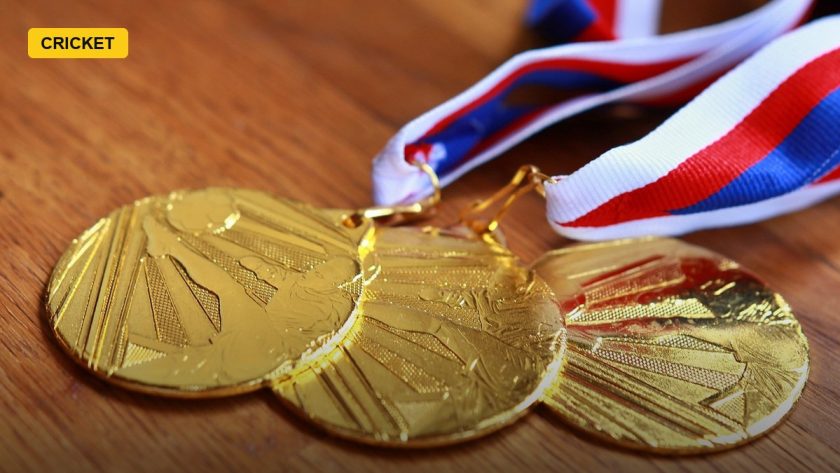
India retained their Asian Games cricket gold medal with a 19-run win over Pakistan in Nagoya, Japan, on October 3, 2026, a result overshadowed almost as much by what did not happen afterward as by what happened on the field. For the fifth consecutive men’s match between the two sides, the captains declined to shake hands, underlining how far cricket’s oldest and most politically charged rivalry remains from any kind of normalization.
How The Match Was Won
India posted 211 for 6 in their 20 overs, built on Abhishek Sharma’s rapid 61 off 28 balls and an unbeaten 51 from just 22 deliveries by Tilak Varma, a batting effort that gave the innings serious late-overs acceleration. Pakistan’s reply fell agonizingly short at 192 for 6, with Hasan Nawaz producing a fighting 96 that kept the chase alive deep into the final over before India closed out the win. It marked India’s seventh consecutive T20 victory over Pakistan, extending a head-to-head dominance that has become a recurring theme whenever the sides meet in global events. For Pakistan, Hasan Nawaz’s innings will likely be remembered as one of the better individual performances in a losing cause at this level, a knock that kept the result in doubt until the very last over despite the eventual margin.
Defending The Title
India’s win in Nagoya saw them retain the gold medal they had won at the previous edition of the Asian Games, continuing their stranglehold on the competition’s cricket event since the sport was reintroduced to the Games programme. For a squad that blends established international players with emerging talent, the tournament has increasingly become a proving ground in its own right, even as its stature sits below bilateral series and ICC events in the sport’s overall hierarchy.
A Rivalry Playing Out Only On Neutral Ground
India and Pakistan have not played a bilateral cricket series against each other in years, with cross-border political tensions that reportedly brought the two nations to the brink of war the previous year spilling directly onto the field. As a result, encounters between the sides now happen almost exclusively at multilateral events staged on neutral territory, such as the Asian Games, Asia Cup or ICC tournaments, rather than through any standard home-and-away arrangement.
No Handshakes, Again
True to the pattern established in recent meetings, there was no handshake between the sides at the end of the match, nor during the medal ceremony that followed. This extended a run of five consecutive men’s matches between the teams without the customary on-field gesture, a visible marker of how little has thawed between the camps even as both governing boards continue to send teams to the same tournaments. Players on both sides have largely avoided commenting directly on the gesture in post-match interviews, instead sticking to measured remarks about the cricket itself, a pattern that has held across all five of the recent meetings and suggests the stance is being managed at an institutional rather than individual level.
An Unusual Medal Ceremony
The presentation itself added another layer of controversy. ICC chairman Jay Shah presented medals to the Indian players, while Pakistani and Sri Lankan athletes received theirs from Asian Games officials instead, a departure from standard protocol that went unexplained by organizers. Sports administrators and commentators have offered competing readings of the moment: some see it as an unavoidable consequence of genuine, deep-rooted political friction that sport cannot be expected to paper over, while others argue that cricket’s governing bodies have a responsibility to insist on baseline sporting courtesies regardless of the politics surrounding any fixture, precisely because failing to do so normalizes the breakdown for future tournaments.
What’s Next
With bilateral cricket between the countries still off the table, the next time India and Pakistan are likely to meet on a cricket field will be at another neutral, multilateral event, continuing the pattern established in Nagoya. Until board-level relations shift, broadcasters, organizers and fans alike are expected to keep treating any India-Pakistan fixture as a heavily charged one-off rather than part of a normal cricketing calendar. For now, both boards appear content to let the cricket itself, rather than any diplomatic gesture, do the talking whenever the fixture comes around again.
Photo: michalnavrat / PIXABAY via Pixabay