
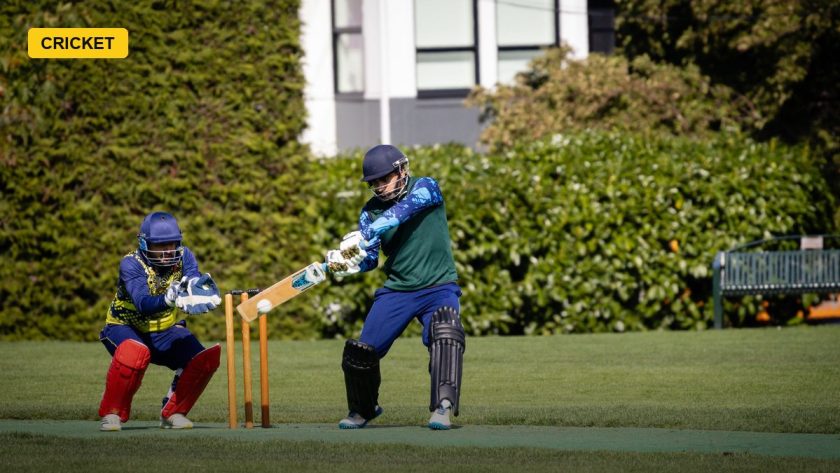
Joe Root passed Ricky Ponting’s long-standing record for the most runs scored in home Test cricket during England’s second Test against Pakistan at Lord’s in August, lifting his home tally to 7,594 runs across 89 Tests on English soil and moving past the Australian great’s mark, which had stood since Ponting’s 92-match home career ended.
A Record Nearly Two Decades in the Making
Root reached the landmark with a second-innings score of 24 at Lord’s, a modest total by his own standards but enough to push him past a benchmark that had endured since Ponting’s retirement from international cricket. The achievement capped a run of home-soil consistency stretching back to Root’s Test debut in 2012, built on a technique that English conditions, with their seam movement and variable bounce, have rarely troubled compared to the difficulties he has occasionally faced overseas.
Closing In on a New Target
At the time of that innings, Root sat just 72 runs short of becoming the first Englishman to reach 12,000 international runs scored specifically on home soil, with the third Test of the Pakistan series still to be played. That milestone would place him in rarefied company, combining his Test, ODI and T20I returns in England into a single home-runs tally few English batters have approached.
England’s selectors have made no secret of wanting Root to reach the mark on home soil during the current international summer rather than waiting for a future season, a preference that has shaped some of the batting-order discussions around the closing stages of the Pakistan series.
The Bigger Chase: Catching Tendulkar
Root’s broader pursuit is of Sachin Tendulkar’s all-time Test runs record. Root passed 14,000 Test runs on June 20 during England’s second Test against New Zealand at The Oval, becoming only the second player in history to reach that mark, needing just a single off New Zealand seamer Matt Henry to get there. His figures at that point stood at 14,073 runs from 302 innings in 165 Tests, at an average of 50.98, with 41 centuries and 67 half-centuries, and a highest score of 262. Tendulkar’s record of 15,921 runs from 200 Tests, with 49 centuries, remains roughly 1,850 runs away, a gap that would require Root to maintain his current scoring rate for another two to three years of consistent selection.
Two Views on His Place in the Game’s History
Former players and commentators remain split on how to rank Root’s achievements against the era’s other great run-scorers. Some pundits argue that reaching 14,000 runs in an age of packed international schedules and increasingly specialised white-ball cricket makes his achievement arguably more impressive than Tendulkar’s, since Root has sustained his Test output while also playing limited-overs cricket for most of his career. Others counter that comparing eras is inherently flawed, pointing out that bowling attacks, pitch preparation and the number of Tests scheduled per year have all changed substantially since Tendulkar’s playing days, making direct statistical comparisons an imperfect measure of greatness.
A Career Built on Durability
Beyond the raw numbers, Root’s longevity itself has become part of the story. Few modern batters have combined his volume of red-ball cricket with a regular presence in white-ball squads for much of the same period, and England’s selectors have consistently prioritised his availability over rotation, treating him as close to undroppable across formats for more than a decade. That durability, rather than any single innings, is what teammates and opposition bowlers alike point to when asked to explain his statistical rise.
What Comes Next
With the home-runs record now his and the 12,000 home-soil milestone within close reach, Root’s next assignments will be watched as much for personal landmarks as for results. England’s packed calendar, including fixtures against New Zealand and the ongoing Pakistan series, gives him regular opportunities to add to both tallies, and selectors have shown no sign of resting their most prolific contemporary batter as the team builds toward the next World Test Championship cycle. Whether he can sustain the scoring rate needed to seriously threaten Tendulkar’s record remains the central subplot of the back half of his career.
England’s away commitments over the next two years, including Ashes cricket in Australia, will test that pursuit more severely than home fixtures have, since Root’s overseas average, while still strong by most standards, has historically trailed his prolific home-soil numbers by a meaningful margin.
Photo: Lorien le Poer Trench / PEXELS via Pexels