
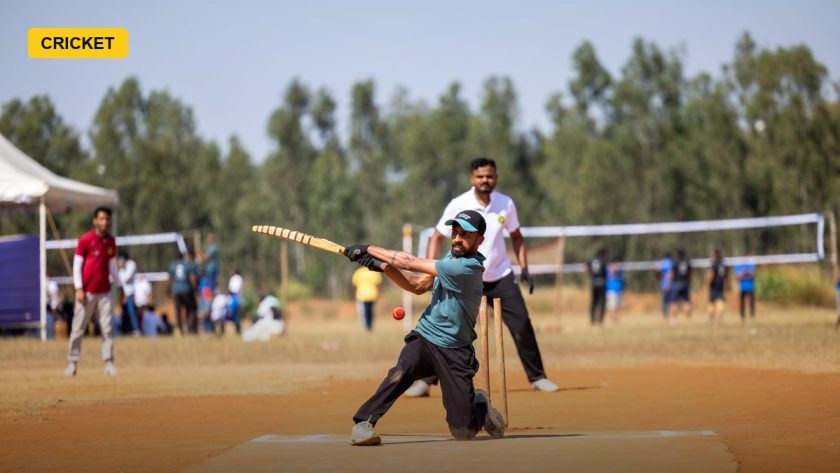
The International Cricket Council has suspended USA international Akhilesh Reddy for eight years after an anti-corruption tribunal found him guilty on multiple counts of attempting to fix or improperly influence matches. The ban, one of the most severe handed down under the ICC’s anti-corruption code in recent memory, is backdated to November 2025, when Reddy was first provisionally suspended pending the investigation.
What the tribunal found
According to the ICC, the tribunal determined that Reddy had tried to fix or improperly influence the outcome of matches, had attempted to recruit a fellow player into participating in the same scheme, and had deleted data and messages from a mobile device that were relevant to the investigation. That last finding, obstruction of the inquiry itself rather than just the underlying fixing attempt, is understood to have weighed heavily in the length of the ban, since anti-corruption codes across sports typically treat evidence destruction as an aggravating factor distinct from the original offence.
A sport still building its oversight in America
American cricket’s domestic structure has expanded rapidly in recent years, from Major League Cricket’s franchise competition to the grassroots Minor League Cricket system, and the United States co-hosted the ICC Men’s T20 World Cup in 2024. That growth has brought more professional contracts, more televised matches, and more money into a sport that, within the US, still lacks the decades of entrenched anti-corruption infrastructure that exists in cricket’s traditional strongholds like India, England and Australia.
Why a fast-growing market is a target
Sports integrity experts have long warned that expanding markets, where domestic salaries can be modest relative to the betting markets that follow televised matches, are especially attractive to corrupt approaches. A relatively small pool of contracted American players, playing in leagues still establishing their commercial footing, fits that pattern, and Reddy’s case gives USA Cricket and the ICC a concrete example to point to as they build out education programs rather than relying on the deterrent effect of rules alone.
Two views on what the ban actually proves
USA Cricket and the ICC are likely to present the punishment as evidence their anti-corruption unit is working exactly as intended, catching and removing a corrupting influence from the sport before it could do lasting damage to a developing market’s credibility. A more sceptical reading, voiced by some domestic cricket commentators, is that an eight-year ban treats the symptom rather than the cause: without parallel investment in anti-corruption education and oversight at the Minor League Cricket and amateur levels, where player pay is lowest and scrutiny thinnest, individual bans may not meaningfully reduce the underlying exposure as the American game continues to grow.
The stakes of getting this right
Cricket’s return to the Olympic program at the 2028 Los Angeles Games, in the T20 format, raises the stakes considerably for how the sport is perceived within the United States. A high-profile integrity scandal involving a host nation’s own international player, even one resolved decisively through a lengthy ban, is the kind of story that could shape mainstream American sports media’s first real exposure to the sport, making the ICC’s and USA Cricket’s follow-through on oversight as important as the ban itself.
What’s next
Reddy’s suspension runs until 2033 under the backdated timeline, effectively ending his prospects of representing the United States at a home Olympics. For the sport’s administrators, the immediate task is less about this individual case, which is now closed, than about whether USA Cricket, Major League Cricket and Minor League Cricket move to expand anti-corruption education down through the domestic pyramid before the next high-profile opportunity for a fix presents itself.
Major League Cricket and its feeder competition, Minor League Cricket, have both grown quickly on the strength of outside investment and high-profile overseas signings, but neither league has existed long enough to have built the kind of deeply embedded anti-corruption culture that older competitions in India, England and Australia have developed over decades. Reddy’s ban is likely to be treated internally as a case study for exactly the kind of player profile — contracted, visible, but not among the sport’s highest earners — that anti-corruption education programs in newer markets most need to reach before a fix is attempted rather than after one is uncovered. USA Cricket’s own credibility as a governing body is also tied up in how it responds, since a sport trying to establish itself in a new market cannot afford a reputation for looking the other way on integrity issues.
Photo: Anil Sharma / PEXELS via Pexels