
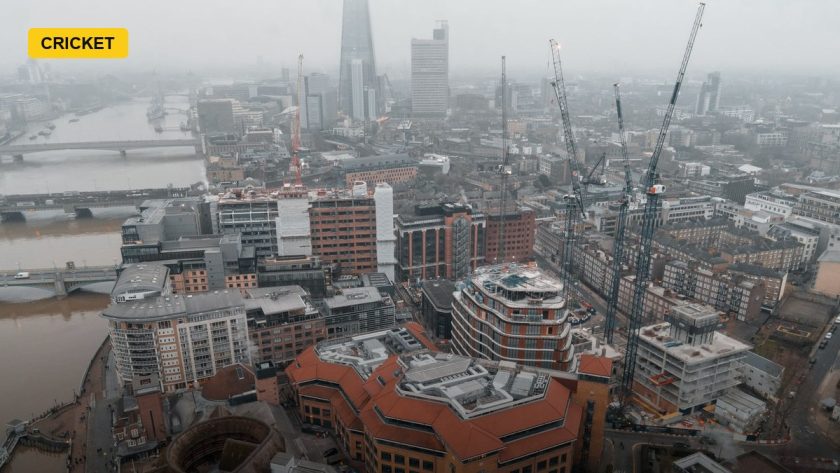
The ICC has confirmed that The Oval in London will host the 2027 World Test Championship Final, scheduled to run from Wednesday, June 9 to Sunday, June 13, 2027. The announcement gives England and Wales the hosting rights for the first of three consecutive WTC finals it will stage through 2031, and organisers have deliberately tied the fixture to a bigger anniversary: 2027 marks 150 years since the first Test match was played, between Australia and England in Melbourne in March 1877.
A Ground With History Already Attached
This will be The Oval’s second time hosting the WTC Final, having also staged the inaugural edition’s successor event in 2023, when Australia beat India to claim the title. Handing the same venue back-to-back opportunities to host the sport’s biggest Test match, four years apart, reflects both The Oval’s infrastructure and the England and Wales Cricket Board’s standing within the ICC as the body responsible for selecting the venue for each of its three allotted finals. The WTC Final has so far been won by three different countries since the competition’s launch: New Zealand triumphed in the first final in 2021, Australia took the title in 2023, and South Africa became the defending champions after winning in 2025.
Why England Gets Three In A Row
The ICC’s decision to award the ECB hosting rights for 2027, 2029 and 2031 consolidates the championship’s showpiece match in a single cricketing nation for the better part of a decade, a structural choice that differs from the sport’s other marquee events, which typically rotate among multiple bidding boards. ICC General Manager of Events and Operations Gaurav Saxena framed the 2027 edition specifically around the anniversary, saying the final ‘will hold special significance as cricket celebrates 150 years of Test cricket.’ ECB Managing Director of Competitions and Major Events Neil Snowball said the board was ‘honoured to be staging the next three ICC World Test Championship Finals in England and Wales,’ language that makes clear the arrangement was negotiated as a package rather than decided tournament by tournament.
The Race To Get There Is Still Wide Open
With the current WTC cycle running through two years of bilateral Test series across all twelve full members, the make-up of the 2027 final remains unsettled, decided on points percentage across every completed series rather than a fixed group stage. Both finalists from 2025 — South Africa as champions and Australia as runners-up — remain firmly in contention, but New Zealand’s recent form has kept them firmly in the picture as well, while traditional heavyweights India and England have had to work through patchier stretches that leave their qualification far from guaranteed. The qualification picture will keep shifting with every completed series between now and the cut-off, making the 2027 final one of the more genuinely contested in the championship’s short history.
A Celebration Some See As Uneven
The 150th-anniversary framing has been broadly welcomed by traditionalists who see it as overdue recognition for the format amid cricket’s ongoing pivot toward T20 leagues and shorter formats. But the decision to lock in England as the final’s host for three straight cycles has also drawn pointed criticism from boards and commentators who argue it concentrates the championship’s biggest commercial and cultural moment in the game’s wealthiest market at the expense of countries like New Zealand and South Africa, both of which have actually won the trophy away from a true neutral venue. Advocates for rotating the final more broadly argue that a final played in, say, Wellington or Cape Town would do more to grow Test cricket’s audience in markets where the format is under greater commercial pressure than restaging it in a country where Test cricket’s survival has never seriously been in doubt.
What Happens Between Now And June 2027
For the twelve competing nations, the practical task now is simple: keep winning Test series to stay inside the qualification picture before the cycle closes. For the ICC and ECB, the task is different — building a 150th-anniversary program around the final itself, with details on accompanying celebrations, exhibitions and commemorative events still to be announced. Whichever two teams arrive at The Oval in June 2027, the match will carry a historical weight the first two WTC finals did not: the explicit job of marking a century and a half of the format organisers are betting still has a future worth celebrating.
Photo: Ollie Craig / PEXELS via Pexels