
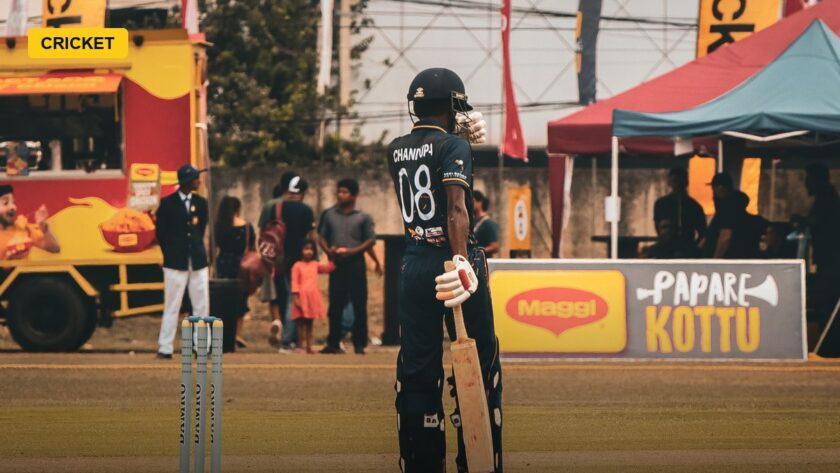
Pakistan sealed their T20I series against Sri Lanka with a match to spare, crushing the tourists by 82 runs in Rawalpindi on October 11 behind a near-century from Maaz Sadaqat and a brisk fifty from captain Sahibzada Farhan, posting 215 for 3 — the second-highest total in Pakistan’s T20I history — before bowling Sri Lanka out for 133. The margin of victory was Pakistan’s largest over Sri Lanka in a bilateral T20I in several years, and it came in front of a packed Rawalpindi crowd that had turned out expecting a far tighter contest between two sides with a long and competitive head-to-head record.
Sadaqat Falls Four Short of a Maiden Century
Sadaqat, playing with the freedom of a young batter still building his international reputation, scored 96 off just 51 balls, narrowly missing what would have been his first T20I century before he was dismissed searching for the milestone. His innings, built on clean hitting through the off side and a willingness to target Sri Lanka’s spinners early, set the tone for an innings that never let the visitors into the contest. Farhan complemented him with 73 off 44 balls at the top of the order, giving Pakistan a platform that put the result beyond doubt well before the final over.
A Total for the Record Books
Pakistan’s 215 for 3 stands as the second-highest total in the nation’s T20I history, behind only a 232 for 6 scored against England in 2021 — a benchmark that underlines how rare an innings of this scale is even in an era of increasingly aggressive T20 batting. The total also reflected a deliberate shift in approach under the current team management, which has pushed Pakistan’s top order to bat with more intent in the powerplay rather than building an innings conservatively before accelerating late, a tactical change that paid off decisively against a Sri Lankan attack missing some of its first-choice bowlers for this tour.
Sri Lanka’s Reply Never Got Going
Chasing 216, Sri Lanka lost early wickets and never found the partnerships needed to stay in touch with the required rate, eventually finishing on 133 for 7 in their 20 overs. Mohammad Imran Randhawa led the Pakistan attack with figures of 3 for 11, exploiting a surface that offered turn as the match progressed, while fellow spinner Salman Mirza added two wickets of his own. Sri Lanka’s most senior spinner, Maheesh Theekshana, was left unbeaten on 32 in a lower-order rearguard that came too late to threaten a genuine chase.
Context: A Series Pakistan Had to Win
Pakistan had already taken the opening match of the three-game series by four wickets, meaning Tuesday’s win secured the series 2-0 regardless of the outcome of the dead-rubber third match still to come. The result extends a strong run of white-ball form for Pakistan at home, where the team has leaned on its depth of young batting talent — Sadaqat among them — to offset a bowling attack that has, at times this year, lacked the experienced seam options that powered Pakistan’s white-ball sides in previous World Cup cycles.
What Sri Lanka Must Fix
For Sri Lanka, the loss raises familiar questions about a batting order that has struggled for consistency on the subcontinent this year, particularly against high-quality spin on surfaces that offer turn, a weakness opposition analysts have increasingly targeted when setting fields and bowling plans against the tourists. Team management will likely face pressure to rotate personnel for the series finale, giving fringe batters a chance to address a middle order that has repeatedly failed to build partnerships after early breakthroughs — a pattern that has cost Sri Lanka in multiple bilateral series over the past twelve months, not just this one.
What’s Next
The two sides play the third and final T20I to close out the tour, a dead rubber for the series outcome but still an opportunity for both teams to fine-tune combinations ahead of a busier white-ball calendar. For Pakistan, the series win adds momentum heading into a home season already shaping up as a proving ground for a new generation of batters; for Sri Lanka, it’s a result that will prompt a hard look at team selection and approach before their next assignment.
Photo: Lesandu Alokabandara / PEXELS via Pexels