
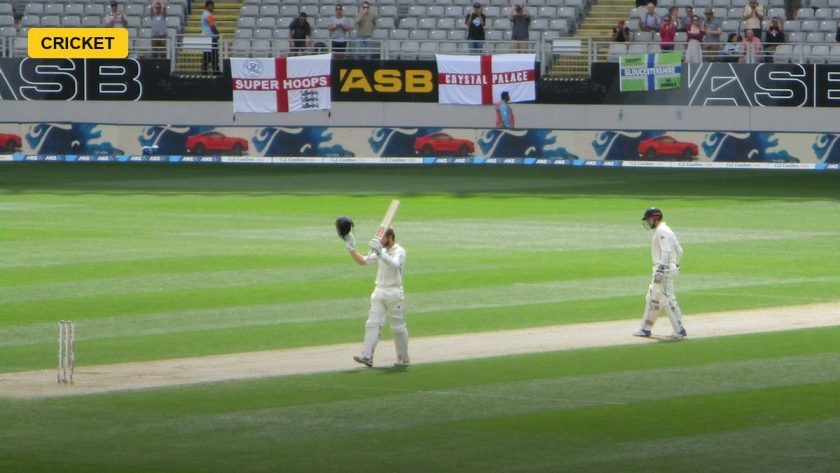
Kane Williamson’s pursuit of a milestone no New Zealander has ever reached is entering its final stretch, and the question hanging over it is no longer just about arithmetic. After New Zealand’s three-Test series in England, in which Williamson’s returns were modest by his own standards, the 35-year-old sits on 9,515 Test runs from 110 matches at an average of 54, meaning he needs 485 more runs to become the first New Zealand batter — and just the 16th in Test history — to reach 10,000. The milestone chase has taken on added significance because of persistent, unresolved speculation about how much longer Williamson intends to keep playing the format.
A Landmark Delayed
Williamson had entered the England tour with the 10,000-run mark well within sight, needing 539 runs across the series to reach it outright. He fell short, and the series itself carried heavier headlines than his personal statistics: it was the tour on which Ben Stokes retired from Test cricket following the third Test at Trent Bridge, closing out a rivalry the two had shared across more than a decade of Ashes-adjacent and bilateral cricket. Williamson’s own contribution included at least one notable innings — reports from the tour describe a century that helped set up a run chase for England — but his overall series aggregate did not close the gap as much as New Zealand had hoped.
The Retirement Question
Williamson said in December that he was weighing retirement from the format, a comment that immediately shadowed every subsequent squad announcement involving him. He has since committed to New Zealand’s next block of Tests, including the tours of Ireland and England, but has not given a firm timeline beyond that. Former New Zealand seamer and commentator Simon Doull has fuelled further speculation with what was described as a cryptic tease of a big announcement during England-New Zealand coverage, though nothing concrete about Williamson’s plans has followed publicly.
Where He Stands Among the Greats
Williamson became New Zealand’s all-time leading Test run-scorer several years ago and was previously confirmed as the first New Zealander to pass both 8,000 and 9,000 Test runs, reaching the latter mark faster than all but one of his contemporaries in the so-called Fab Four generation of Kohli, Root and Smith. Reaching 10,000 would place him alongside a group of batters — currently 15-strong — that includes Sachin Tendulkar, Ricky Ponting and Jacques Kallis, and would be a historic first for New Zealand cricket, a country that has produced far fewer marathon Test careers than India, Australia or England given its smaller playing pool.
Diverging Views on the Timeline
New Zealand Cricket has every incentive to keep Williamson playing until he reaches the landmark, both for its symbolic value and for what his experience still offers a Test top order in transition. Some former players and commentators argue Williamson should be managed carefully rather than rushed into matches purely to chase the number, given his own comments about weighing retirement suggest fatigue with the rigours of the format. Others counter that at an average still north of 54, there is no cricketing case for easing him out, and that the milestone chase should simply run its natural course across New Zealand’s next Test assignments.
What’s Next
New Zealand’s immediate Test calendar is light: after wrapping up limited-overs cricket in the West Indies in July, the side’s next confirmed Test series is a two-match assignment at home to Sri Lanka in January 2027 as part of an all-format tour. That leaves Williamson, and New Zealand Cricket, a considerable gap before the 10,000-run milestone can realistically be chased again in a Test match, ensuring the speculation about both the record and his broader Test future will likely simmer well into the New Zealand summer.
What a Reduced Fixture List Means for New Zealand
The scarcity of upcoming Tests is itself a subplot. New Zealand’s schedule has been dominated by white-ball cricket in the second half of 2026, a reflection of a wider crunch on the international calendar in which bilateral Test cricket for smaller boards is increasingly squeezed between franchise leagues and shorter formats. For a player in Williamson’s position, fewer Test opportunities mean the milestone chase could stretch on for months rather than being resolved quickly, a scenario that keeps the retirement question open for longer than either the player or the board might prefer. New Zealand Cricket officials have publicly emphasised wanting to build the home summer around Test cricket again from 2027 onward, partly in response to criticism that the current FTP cycle has thinned out red-ball fixtures for the BLACKCAPS.
Williamson’s chase inevitably invites comparison with his three closest contemporaries across the past cricketing generation: Virat Kohli, Joe Root and Steve Smith. Of that group, Root has already passed 14,000 Test runs and sits second on the all-time list behind Sachin Tendulkar, while Smith reached 9,000 runs faster than any of his rivals bar one. Williamson’s numbers, an average in the mid-50s across 110 Tests, arguably represent the most efficient run-scoring of the four on a purely statistical basis, even though the volume gap to Root in particular remains wide. That efficiency is precisely why many former players argue New Zealand should structure whatever fixtures remain in his career around giving him the best possible chance to reach 10,000 while his form holds, rather than risk the record being left permanently just out of reach.