
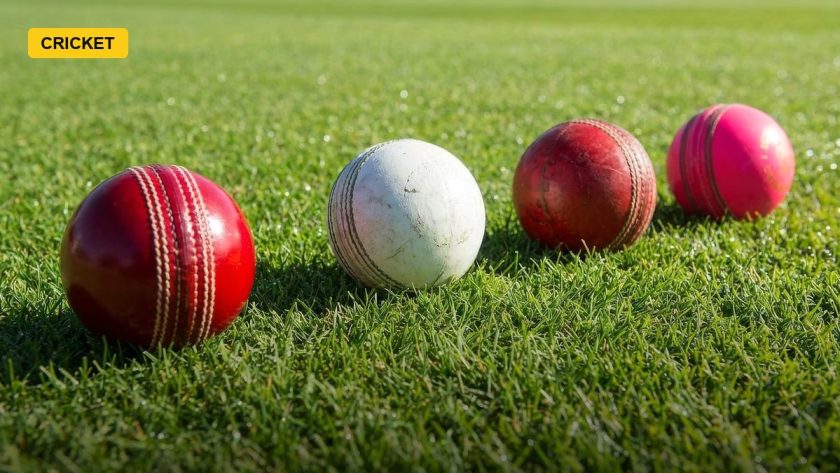
International cricket entered a new regulatory era this month as the International Cricket Council’s revised playing conditions came into force for every bilateral series and ICC event beginning on or after October 1, 2026. The changes, confirmed by the game’s governing body and detailed extensively by ESPNcricinfo, touch nearly every corner of the sport’s rulebook, from how long a batter can take to get ready to face a delivery, to whether a pink ball can be used in a daytime Test to beat bad light. Series already in progress when the rules were published will continue under the old regulations, but every assignment starting fresh this October and beyond, including Australia’s tour of South Africa and Bangladesh’s Test against Afghanistan, will be the first to operate under the updated code.
Cracking Down on Time-Wasting
The most consequential change targets batters who slow the game down between deliveries. Under the new system, a batter who is not ready to face the ball within the prescribed time limit receives a warning for a first offence and a final warning for a second. A third offence in the same innings results in five penalty runs being awarded to the fielding side, and the ICC has confirmed that every subsequent breach in that innings will also cost five runs. Crucially, the governing body has retained the option to pursue a separate Code of Conduct charge against a batter who persists in wasting time, meaning repeat offenders could face fines or suspension points on top of the in-match penalty. The provision mirrors the stop-clock regulations already used to police bowling sides, extending the same philosophy of statutory, escalating sanctions to the other half of the equation.
The Pink Ball Experiment
Perhaps the most eye-catching trial buried in the new conditions allows boards to agree, match by match, to use a pink ball in daytime Test cricket specifically to reduce the amount of playing time lost to bad light. Any such agreement must be struck before a Test begins and, once in place, must apply for the entire match rather than being switched on and off session by session. The pink ball has until now been reserved almost exclusively for day-night fixtures under lights; permitting it in conventional daytime play is a tacit admission from the ICC that bad-light stoppages, particularly in English and New Zealand conditions, have become a persistent headache for broadcasters and spectators alike.
Ball Standards and Fielding Tweaks
Alongside the headline measures, the ICC has also moved to standardise ball specifications across the men’s and women’s games and has clarified several fielding regulations, including restrictions clubs and umpires had flagged as ambiguous in recent seasons. Reports around the announcement also indicated an easing of restrictions on using saliva to shine the ball, a practice suspended during the pandemic years and only partially revisited since, though officials stressed that any change would be monitored closely by match referees for signs of ball-tampering risk.
Reaction from Players and Pundits
The response from the playing group has been mixed. Several senior batters privately welcomed the clarity of a graduated penalty system over the previous, more subjective approach of umpires simply warning players verbally, arguing it removes ambiguity from a contentious area of the game. Commentators, however, have been quicker to question the pink-ball trial. Pundits covering the South Africa-Australia series pointed out that asking two boards to agree on a ball colour before a ball is bowled introduces a new negotiating wrinkle to Test scheduling, and that players who have spent entire careers reading the seam and lacquer of a red Kookaburra or Dukes ball will need fresh adjustment time against a pink ball in full daylight, where its behaviour off the surface remains less studied than under lights.
Administrators Defend the Overhaul
Governing bodies have defended the package as a necessary modernisation rather than a gimmick. The time-wasting penalties, in particular, were framed by officials as a direct response to over-rate complaints that have dogged Test cricket for years, with slow over rates repeatedly cited in post-match analysis of Championship matches. By placing a concrete run cost on dawdling batters rather than relying solely on fines levied after the fact, the ICC is betting it can change behaviour in real time, during the match itself, where it affects the result rather than just the team’s bank balance weeks later.
What It Means Going Next
The practical test of these changes begins almost immediately. Australia’s three-match Test series in South Africa, Bangladesh’s one-off Test against Afghanistan in Abu Dhabi, and Sri Lanka’s white-ball tour of Pakistan all kick off in the first half of October under the new code, giving administrators an early, high-profile window to see whether the time-wasting penalties bite as intended and whether any board is willing to actually trial the pink ball in a daytime fixture before the year is out. If the measures prove effective in tightening over rates without generating the kind of chaotic penalty-run controversies critics have warned about, they are likely to be carried into the next ICC rules cycle; if not, expect further tinkering before the 2027 World Cup.
Photo: RisingStudio07 / PIXABAY via Pixabay