
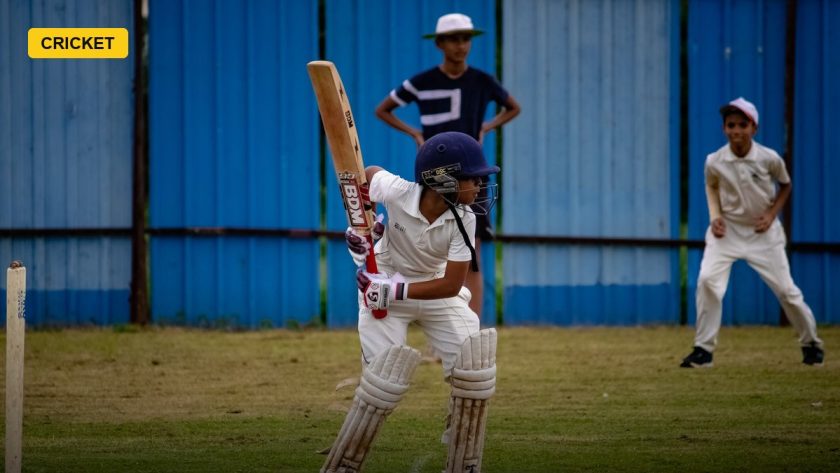
India A seized control of the first unofficial Test against Australia A at the Cricket Association Pondicherry Siechem Ground, with Kumar Kushagra’s century and a four-wicket haul from Shams Mulani combining to hand the hosts a commanding 163-run first-innings lead inside two-and-a-half days of the September 22-25 fixture in Puducherry.
Kushagra’s Second Hundred In A Row
Kushagra, who had retired hurt overnight on 82, resumed his innings and pushed on to 113, his seventh first-class century and, notably, his second in successive innings following an earlier hundred in the Duleep Trophy final. The wicketkeeper-batter anchored India A’s innings alongside contributions from Sai Sudharsan, who made 57, and Tanush Kotian, who chipped in with 69 further down the order. Between them, the trio helped India A post 334 all out from 117.3 overs, a total built through patient partnerships rather than any one explosive passage of play.
Mulani Rips Through The Australia A Top Order
Australia A’s reply never got going. Left-arm spinner Shams Mulani finished with figures of 4 for 67, and the manner of his wickets told the story of the innings: he clean-bowled captain Peter Handscomb for just eight, had Liam Scott caught behind, dismissed Jason Sangha caught at backward point as the batter attempted an ambitious reverse hit, and later picked up the ninth wicket, removing Todd Murphy. Australia A were bundled out for 171 in only 55.3 overs, handing India A a first-innings lead of 163 runs and control of the match heading into the back half of the Test.
A Rare Bright Spot For The Tourists
Jason Sangha’s 46, laced with five fours and a six before his dismissal attempting the reverse hit off Mulani, was the one meaningful counter-attack from Australia A’s innings. It offered a glimpse of the tourists trying to wrest momentum back through aggressive strokeplay rather than survival, but the approach ultimately contributed to their collapse once Mulani found his rhythm. With the pace bowling failing to make early inroads and the middle order folding quickly around Sangha’s cameo, Australia A’s innings read as a cautionary tale about tackling turning tracks on the subcontinent early in a tour.
Why This A-Team Series Matters
Unofficial Test series between India A and Australia A have increasingly served as proving grounds for players on the fringes of full international selection, and both boards use the format to assess depth ahead of major bilateral series. For India, a strong showing from batters like Kushagra and Sudharsan, alongside spin options like Mulani, keeps selectors’ options open heading into a packed home season. For Australia, exposing players such as Handscomb, Sangha and Murphy to Indian conditions is viewed as a deliberate part of squad-building for future tours, even if results in these fixtures do not always translate directly into senior selection.
Two Perspectives On The Series So Far
Indian commentators following the match have pointed to the composure shown by both Kushagra and Mulani as evidence that the country’s next generation of red-ball players is deepening beyond the established core, with some suggesting Kushagra’s back-to-back hundreds strengthen his case as a long-term wicketkeeping option. On the Australian side, observers have been more circumspect, framing the batting collapse as a technical and tactical challenge against high-quality spin rather than a reflection of overall squad depth, while also noting that A-team tours are explicitly designed to expose such gaps early rather than in a full international fixture.
What’s Left In The Match And The Series
With a first-innings lead of 163 and two days of the four-day fixture remaining, India A will look to bat Australia A out of the contest in the second innings and set up a declaration that leaves enough time to force a result. A win here would give the hosts early momentum in the wider A-team series, while Australia A will need a significantly improved batting performance, particularly against Mulani and the spin-heavy attack, to level things up before the tourists head into the next leg of their India assignment. Beyond the immediate result, both boards will file this match away as data for selection meetings later in the year. India’s selectors have repeatedly used the A-team pathway to fast-track players into the senior set-up when injuries or workload management open a gap, and a wicketkeeper-batter stringing together consecutive first-class hundreds is exactly the kind of form that tends to get flagged in those discussions. Australia’s coaching staff, meanwhile, will be more focused on how quickly players like Sangha and Murphy can adjust technically, since tours built around unofficial fixtures are explicitly designed to let players work through problems away from the scrutiny of a full international cap. Either way, a low-key four-day match on a club ground in Puducherry has already produced enough individual performances to shape conversations well beyond this series.
Photo: Sandeep Singh / PEXELS via Pexels