
Shubman Gill has been named the ICC Men’s Player of the Month for September 2026 after a one-day international series against West Indies in which he rewrote the record books. His unbeaten 223 off 133 balls in the second ODI in Guwahati is now the fastest double century in ODI history, reached in just 117 balls, and the highest individual score ever made in a successful run chase. It capped a series in which India won the first two matches comfortably before West Indies salvaged a consolation victory in the third, with India taking the three-match series 2-1.
A chase for the record books in Guwahati
The numbers from Guwahati remain startling even on repeat viewing. Chasing a target of 405 for 7, India got home with Gill unbeaten on 223 off 133 balls, an innings containing 26 fours and eight sixes, as the hosts finished on 406 for 2. His double century came up in 117 balls, the fastest in the format’s history, eclipsing the previous benchmark by a considerable margin. It followed a brisk 110 off 108 balls in the series opener in Thiruvananthapuram, where India successfully chased 295 for 7, meaning Gill finished the two wins with 333 runs at a strike rate comfortably above a run a ball.
Context: a fifth Player of the Month award and a career peak
The September award was Gill’s fifth ICC Player of the Month honor, the most of any men’s cricketer, a record that speaks to a remarkably consistent run of white-ball form over the past two years. He saw off competition for the September award from India teammate Abhishek Sharma and Zimbabwe’s Sikandar Raza, both of whom had strong individual months of their own, underlining the depth of competition even in a month Gill dominated. The achievement also arrived during a series in which fellow India great Virat Kohli reached 15,000 ODI runs, becoming only the second batter after Sachin Tendulkar to do so, giving the series a layered narrative of past and present greatness colliding in the same lineup.
How the series actually finished
For all the individual fireworks, the series was not a complete sweep. West Indies responded in the third match in New Chandigarh on October 3, winning by five wickets to avoid a whitewash and take something tangible from the tour. That the tourists could finish with a win, even in a dead rubber, offered their batting unit encouragement after being outplayed in the first two games, while for India it was a reminder that even box-office individual form does not guarantee a clean sweep when focus dips in a dead rubber.
Differing perspectives on the achievement
Former players and commentators have been largely unanimous in hailing the scale of Gill’s innings, with the chase itself — successfully run down against a total above 400 — regarded as historically significant independent of the individual landmark. Some analysts have nonetheless cautioned against reading too much into one spectacular innings against an attack that has struggled for consistency this year, noting that the sterner tests of Gill’s growing reputation will come in Australia and England rather than in home conditions against a West Indies side also missing key personnel through rotation. Others within Indian cricket point to the context of the series — coming on the back of Kohli’s long-standing landmark — as evidence of a batting lineup managing a generational transition unusually smoothly.
What it means and what’s next
Gill’s innings and the wider series result add further gloss to a strong year for Indian white-ball cricket ahead of a daunting new assignment: a historic 12-match tour of New Zealand beginning with five T20Is from October 22, followed by five ODIs from November 4, where New Zealand Cricket has already named Gill among the headline attractions they expect fans to turn out for. Both Gill and Kohli are expected to be included when India’s squad for that tour is announced, giving selectors a selection headache of the most welcome kind as they manage workload, form, and a batting order stacked with both proven greatness and a rising generational talent.
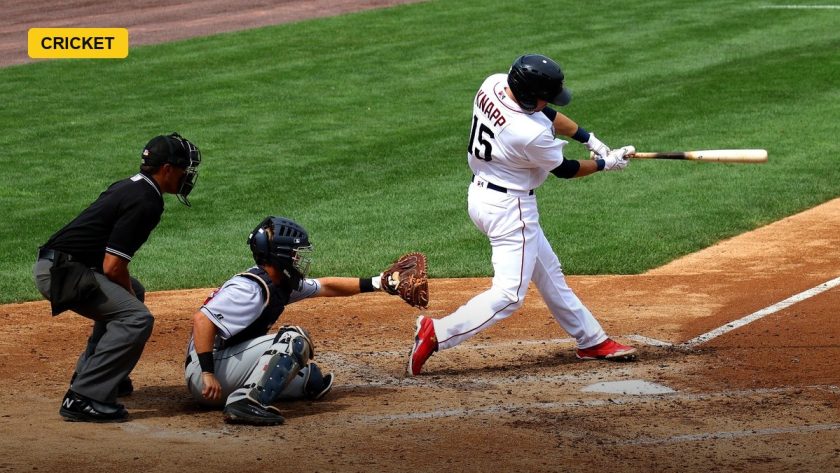
Photo: BarbeeAnne / PIXABAY via Pixabay