
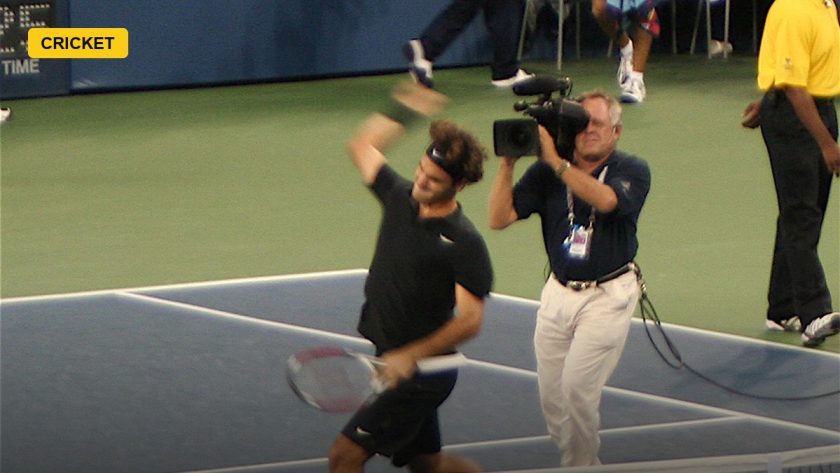
Flushing Meadows is about to host the biggest edition of the US Open in its 146-year history. Fan Week begins August 23, qualifying and the revamped Mixed Doubles Championship kick off the same day, and the main singles draws — 128 players each, no byes — open Sunday, August 30. In total the tournament now spans 22 competition days, the most ever, a scheduling shift the USTA has framed as giving fans more access without diluting the two-week championship rhythm that has defined the event since the 1970s.
A field led by two defending champions
Aryna Sabalenka and Carlos Alcaraz both arrive at the USTA Billie Jean King National Tennis Center as defending champions, and both carry outsized stakes into September. Sabalenka beat American Amanda Anisimova in last year’s final and is now chasing something no woman has done since Serena Williams from 2012 to 2014: three consecutive US Open singles titles. She has reached the semifinals or better in five straight editions and sits at 29-3 in New York since 2021, numbers that make her the tournament’s most consistent performer of the decade regardless of what happens elsewhere in the draw.
Alcaraz’s wrist and the men’s picture
The men’s draw carries more uncertainty. Alcaraz beat Jannik Sinner in an epic four-set 2025 final, 6-2, 3-6, 6-1, 6-4, but he has not played a competitive match since Barcelona in April because of a wrist injury, and reporting out of his camp suggests his fitness heading into Flushing Meadows remains a genuine question mark rather than a formality. Seedings for both draws are locked in on the rankings as of August 24, with the full draw ceremony on August 27 and the top 32 players in each event seeded — meaning Alcaraz’s ranking slide during his layoff could realistically drop him outside the traditional top-three tier, opening the bracket in ways that would have been unthinkable a year ago.
Sinner, Zverev and the chasing pack
Jannik Sinner enters as world No. 1 and the freshest Grand Slam winner in the field, having lifted his fifth major at Wimbledon in July. Alexander Zverev, a losing finalist in New York back in 2020, finally broke through for his first major at Roland Garros in June and now arrives in Queens looking to prove that breakthrough wasn’t a one-off. Novak Djokovic, chasing yet another slice of history deep into his late thirties, remains a wildcard threat that no seeding committee can fully neutralize. The result is a men’s draw with a clear favorite in Sinner but a genuinely unsettled hierarchy behind him — a rarity in an era that has otherwise been dominated by two or three names at a time.
Fan Week’s expanded footprint
The week before the main draw is no longer a mere prelude. Fan Week, running August 23-29, folds in qualifying rounds, the reimagined 16-team Mixed Doubles Championship — a format the tournament shook up in 2025 to inject star power into a historically under-attended event — and Arthur Ashe Kids’ Day, the annual family-oriented kickoff that has become a fixture of the New York summer sports calendar. Organizers have leaned into the idea that a Grand Slam can function as a multi-week festival rather than a fortnight bookended by dead air, a model other majors are watching closely.
The women’s chasing pack
Sabalenka’s dominance in New York does not mean the women’s draw lacks intrigue. Iga Swiatek continues working to rediscover the form that once made her the sport’s most feared front-runner, arriving in Flushing Meadows still searching for consistency on hard courts, historically her least comfortable surface. Amanda Anisimova, last year’s beaten finalist, gave American fans a genuine run at a first home Grand Slam champion in years and will be under pressure to prove that run was a springboard rather than a peak. Coco Gauff, the 2023 champion, and a deep cohort of American players give the home crowd multiple rooting interests even with Sabalenka installed as the heavy favorite.
What it means for the fortnight ahead
Whether Alcaraz can answer his wrist question in time to defend a title he has now won, and whether Sabalenka can complete a three-peat that has eluded every other woman for over a decade, will shape the narrative of the next month. But the structural story is just as significant: a 22-day US Open, an expanded Fan Week, and a seeding system that could scramble the men’s bracket all point to a tournament trying to reinvent its own scale while the sport’s biggest names manage injuries and history in equal measure. The draw ceremony on August 27 will offer the first hard evidence of how those forces collide, and by the time trophies are lifted after a 22-day slog, both fields will have been tested by a schedule unlike any in the tournament’s near-150-year history.