
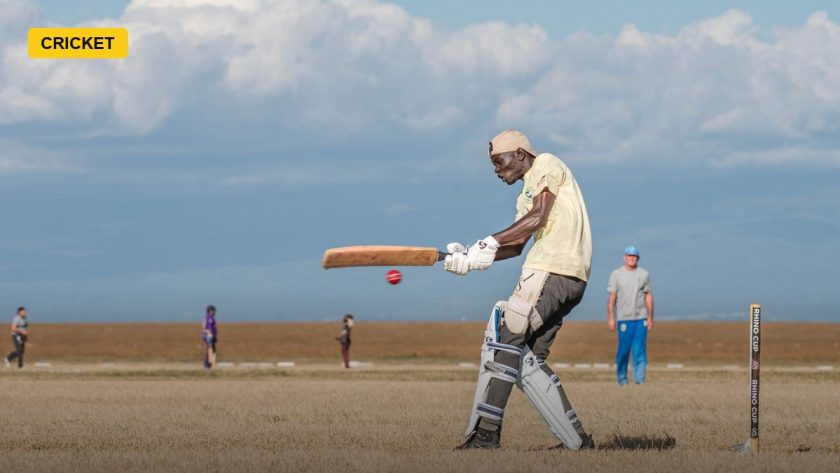
West Indies’ women’s team wraps up a bilateral tour of Zimbabwe on October 7, closing out a fortnight that began September 24 and included three ODIs and three T20Is played entirely in Harare. The tour gave Zimbabwe’s women’s programme a rare extended block of fixtures against a Full Member nation, while West Indies used the assignment to test squad depth away from the higher-profile white-ball cricket their men’s team has been playing simultaneously in India.
Media coverage of the tour has been noticeably thinner than for the concurrent men’s series in India, a disparity that reflects broader commercial realities across the women’s international game even as playing standards and competitive intensity in bilateral cricket between Full Members continue to rise. Both boards have nonetheless treated the fixtures seriously from a selection standpoint, with neither side fielding a significantly weakened squad despite the lower broadcast profile, suggesting internal player-development priorities are increasingly decoupled from how much external attention a given series receives. Both boards have indicated they would welcome a reciprocal fixture in the Caribbean in future scheduling cycles, a sign that this tour is viewed internally as the start of a more regular bilateral relationship rather than a one-off assignment.
A Rare Bilateral Block for Zimbabwe
Zimbabwean women’s cricket has historically received far fewer bilateral fixtures than its men’s counterpart, making a two-format, six-match series against a Full Member side a significant allocation of fixtures by regional and global scheduling standards. Zimbabwe Cricket has pushed in recent years for more consistent fixtures for its women’s programme, arguing that sporadic international exposure makes it difficult to develop the squad depth needed to compete consistently at global qualifying events.
West Indies’ Own Balancing Act
For Cricket West Indies, fielding a women’s squad in Zimbabwe at the same time as a separate men’s squad toured India illustrates how thinly the board must now spread playing and coaching resources across simultaneous assignments — a challenge echoed by boards worldwide as the global calendar for both men’s and women’s cricket grows denser. The tour also gave West Indies selectors a chance to assess players outside the senior core ahead of future global white-ball tournaments.
On-Field Stakes Beyond the Series Result
Beyond the immediate series outcome, both boards have used the tour to evaluate players against conditions and opposition styles they rarely face: Zimbabwean batters tested against genuine pace and spin variety from a Full Member attack, and West Indies players exposed to Harare’s slower, more turning pitches that differ markedly from Caribbean surfaces.
Two Perspectives on Fixture Scarcity
Zimbabwean cricket administrators have welcomed the tour as proof that patient lobbying for more fixtures can pay off, while also cautioning that a single bilateral series does not solve the structural fixture scarcity facing the women’s game outside a handful of well-funded boards. West Indies’ own commentators have framed the tour primarily as squad-building exercise, with less emphasis on the series result itself and more on identifying players who can be fast-tracked into the senior white-ball setup.
A Single-City Tour by Design
Staging all six matches in Harare rather than spreading them across Zimbabwe’s other international venues, such as Bulawayo’s Queens Sports Club, reduced logistical costs for both boards but also meant local fans outside the capital had no opportunity to watch the series live, a trade-off increasingly common for tours involving boards with tighter travel budgets. The three ODIs and three T20Is gave both sides a reasonably full assessment across formats despite the single-venue concentration, with conditions remaining fairly consistent match to match — useful for selectors isolating player form, less useful for assessing adaptability to genuinely varied conditions ahead of global tournaments where surfaces can differ sharply from game to game.
What Each Side Takes Forward
With the series concluding today, both teams move into separate paths: Zimbabwe’s women look toward further qualifying assignments as they continue pushing the ICC and bigger boards for a denser fixture list, while West Indies return home to a Caribbean cricket calendar already packed with a men’s Test tour of Bangladesh and a home season involving Sri Lanka, New Zealand and Pakistan still to come. The tour’s lasting impact may be measured less by its results than by whether it becomes a template for similarly extended bilateral blocks between emerging and established women’s programmes.
Photo: Engineer John / PEXELS via Pexels