
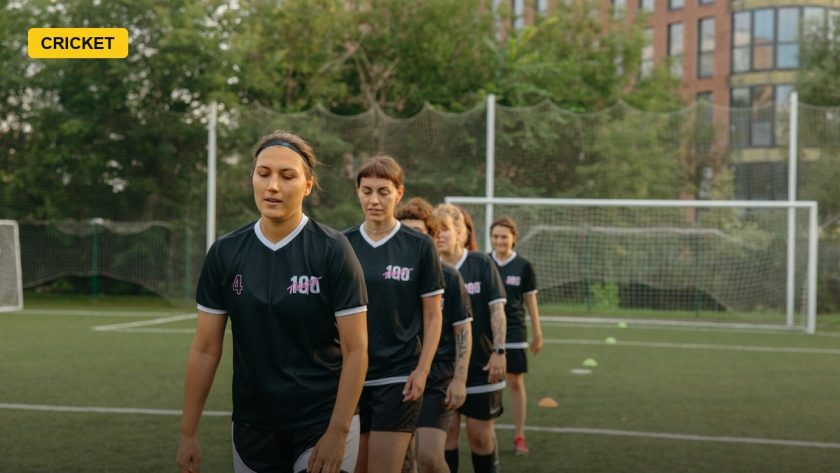
At its Annual Conference in Edinburgh, the International Cricket Council endorsed the continuation of a Development Pathway Programme for Afghan refugee women cricketers and reconstituted a Special Taskforce to steer it, setting an explicit target of getting the displaced players into ICC qualification events by 2030. It is the first time cricket’s governing body has attached a defined timeline to a programme that, until now, had operated largely without one, five years after the Taliban’s return to power ended organised women’s cricket inside Afghanistan.
A Team Without A Country To Play For
Afghanistan remains the only ICC full member without a recognised women’s national team, a status that technically conflicts with the governing body’s own membership requirements but has never triggered the kind of suspension the ICC has used elsewhere. The Afghanistan Cricket Board does not back a women’s team and will not sanction one under current Taliban restrictions on women’s sport, leaving the players who once held domestic contracts — most now resettled as refugees in Australia, England and Canada — without a national structure. In 2024, a group of these former contracted players wrote directly to then-ICC chair Greg Barclay asking for help forming an officially backed refugee team that could compete without needing recognition from Kabul. The Edinburgh decision is the clearest institutional response yet to that request.
Who Is Running The Programme
The reconstituted Special Taskforce adds two new members to its existing roster: Dr Ros Rivaz, an ICC Independent Director, and Sarah Keane, a member of the ICC Chief Executives’ Committee. They join established representatives from the BCCI, Cricket Australia and the England and Wales Cricket Board, giving the taskforce institutional weight from three of the sport’s wealthiest boards. Dr Rivaz described the goal as building ‘a clear and sustainable roadmap’ for the players’ development, language the ICC has used to distinguish this effort from one-off gestures of support.
What The Roadmap Actually Provides
In practical terms, the programme gives players access to cricket and strength-and-conditioning coaches plus physiotherapy support in their home locations — Australia, England and Canada — alongside a phased increase in game time rather than a single, symbolic tournament appearance. Group training camps and competitive fixtures, similar to tours of India and England the squad has already undertaken over the past year, are set to be rolled out in further phases, with opponents chosen strategically to build the squad toward genuine qualification readiness rather than one-off exhibition matches. Former players Nahida Sapan and Firooza Afghan both credited the existing programme with tangible progress: Sapan said it ‘has already made a real difference’ by letting the group train and play together as an actual team, while Afghan pointed to regular access to quality coaching as the key driver of improvement. Cricket Australia board member Mel Jones, who has been closely involved in the programme’s Australian leg, called the initiative ‘an important and powerful one.’
Praise Alongside Pointed Criticism
The announcement drew warm responses from players and administrators directly involved, but it has not silenced a harder question that has followed the ICC for years: why a full member whose board will not field a women’s side continues to retain full voting rights and hosting privileges rather than facing the suspension the ICC has applied to boards for governance failures in the past. Supporters of the current approach argue that sanctioning Afghanistan’s men’s team would punish male cricketers who have no control over the Taliban’s policies, and that investing directly in the displaced women, bypassing the Afghanistan Cricket Board entirely, achieves more for the affected athletes than a symbolic suspension would. Critics, including some human rights advocates who track the issue, counter that a five-year roadmap without any accompanying pressure on the ACB itself risks normalising the status quo, effectively letting the ICC’s own membership rules go unenforced indefinitely while a workaround programme does the harder diplomatic job the governing body has avoided.
The Road To 2030
For now, the refugee squad’s near-term calendar will continue to resemble what it has looked like for the past year: bilateral tours and training blocks hosted by sympathetic boards rather than ICC-sanctioned fixtures. The taskforce’s task over the next phase is to translate that into a genuine pathway toward regional qualifying events, the first real test of whether the 2030 target is realistic or aspirational. Whether the players ultimately take the field at an ICC qualifier under a flag other than Afghanistan’s will depend as much on the governing body’s willingness to keep funding and scheduling the programme as it does on the players’ own progress on the field.
Photo: Anastasia Shuraeva / PEXELS via Pexels